
Showing posts with label Old Masters paintings. Show all posts
Showing posts with label Old Masters paintings. Show all posts
Thursday, February 6, 2020
Lighting in "Supper Party" by van Honthorst

Monday, February 3, 2020
The Extraction of a Tooth

This painting is very accurate with its dimensions and placements of light. The only apparent light source is the (assumed) sunlight coming through the window, which illuminates the man and the dentist. This light casts a shadow on the objects it hits such as the basket and the hat next to the chair. However, the artist is also aware that the objects on the shelves will appear darker because they are not in direct sunlight, and therefore will not be as bright as the objects or people in focus.
Old Woman with a Candle

I found this painting interesting because it perfectly captures the usage of small, dim light in a wider, darker area. There is only one light source so the woman is more illuminated than anything else in the picture, and this is seen in the detail in the structure below her which is faintly lit because it is not in direct view of the candle.
Thursday, January 30, 2020
The Calling of Saint Matthew, Carvaggio

This painting by Carvaggio uses sunlight pouring in from an open window to highlight the expressions on the faces of the people depicted. The light is pouring into an empty room, giving it a hopeful feeling. It allows you to see the sorrow and negative emotions that people are feeling, but one of them is looking up at the light with hope. The light highlights the light colors and provides a contrast that emphasizes the dark colors in shadows. This is a way to reflect the dark emotions they are feeling and the light providing a relief.
From: https://commons.wikimedia.org/wiki/File:The_Calling_of_Saint_Matthew-Caravaggo_%281599-1600%29.jpg

Wednesday, January 29, 2020
Oath of the Horatii, Jacques-Louis David

In this painting, the action appears to take place outside in a courtyard, in natural but dim lighting. The bright light on the arms of the Horatii men draws the eye to their swords as they take the oath. The softer, more concentrated light on the right highlights the expressions of the crying women. The darkness behind the arches distinguishes the figures from the background.
Judith and Her Maidservant, Artemisia Gentileschi

Return of the Prodigal Son

Guercino

View of Toledo

The source of light is clearly from the sun but it is blocked by clouds dimming down the color. The gray sky is similar to the grays of the town but as the landscape becomes more prevalent the lighter green begins to counteract the dark gray.
https://en.wikipedia.org/wiki/View_of_Toledo
Las Meninas
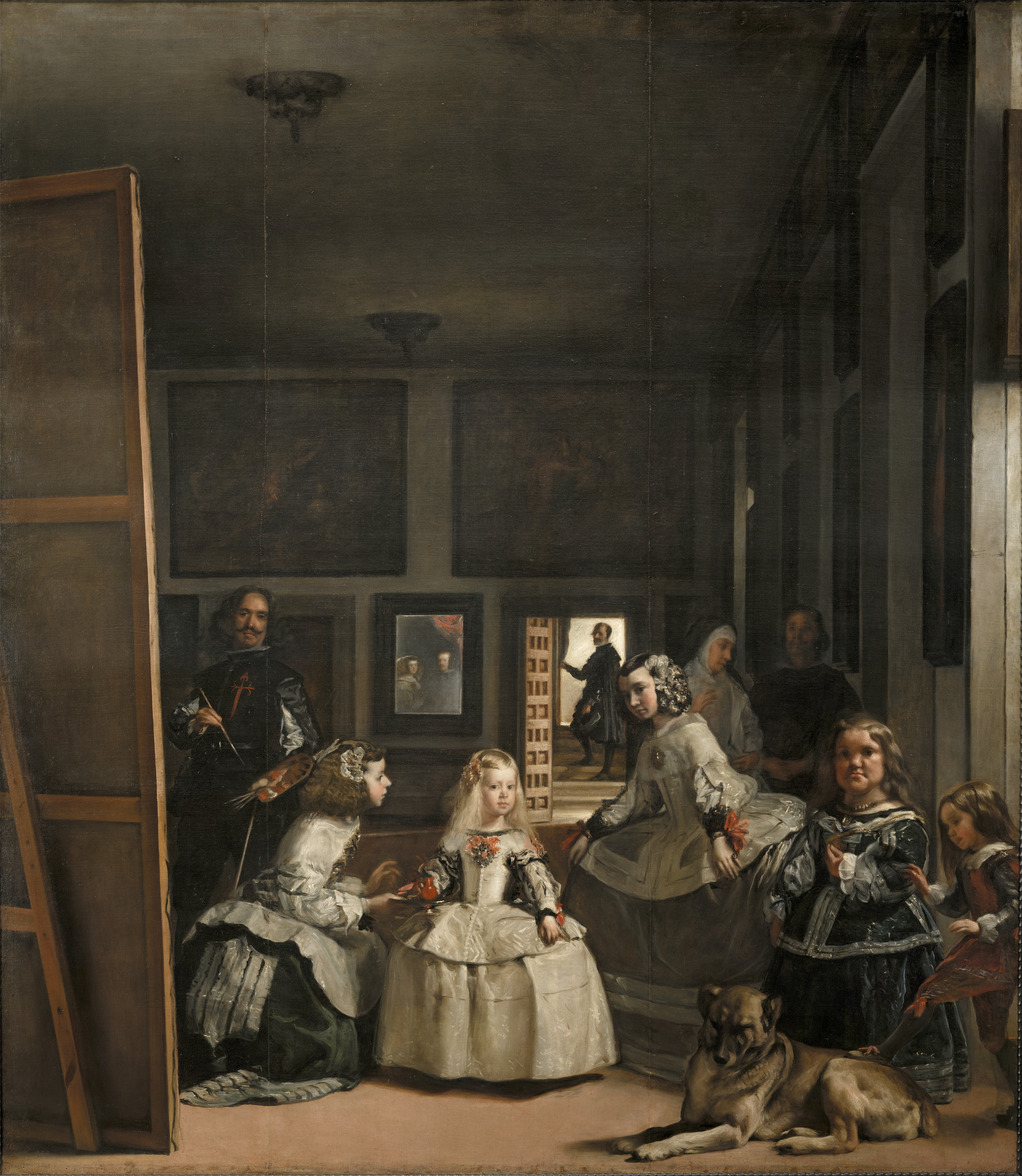
The main source of light for this painting comes from the sun entering the window to the right. The directionality of light allows for interesting shading in for the dresses, but more striking is the gleam it makes on their hair. The sunlight from the staircase in the back serves to further separate the subject from the other subjects by not just a matter of distance but of a different light source.
https://en.wikipedia.org/wiki/Las_Meninas
Philosopher in Meditation, Rembrandt

I like the symbolic use to light in this painting. The meditation philosopher is drenched in golden, borderline holy, light, while those above him (on the stairs, who might symbolize affluent members of society) are in darkness, and those below him/ in the foreground (bottom right, possibly symbolizing less affluent people with menial jobs) are working towards their own enlightenment, as can be seen by the man making his own light. I'm no expert in art history or analysis, but the light is used interestingly.
Source
In Inlet Near Naples with a Castle and Fisherfolk, Claude-Joseph Vernet

I like this picture because it is a realistic representation of how light comes from a source. If you notice the rocky outcrop to the left, you can see that the light touches the top and highlights the plants up there, then the light flourishes through the arch near the bottom left. The rock in between is defined, but not lit. It goes to show how important shadows are and how to properly couple light with shadow.
Source
Twilight, Venice by Claude Monet

I like how twilight in this painting is used to illuminate infrastructure from behind. Twilight sets a somber and peaceful mood, as the sun will be setting soon. The light from behind is enough that we can see reflections in the water on the left and it adds a sense of clarity. However, we are unable to make out a clear shape on the right side, where light and distance are obscuring our vision of the rest of the skyline. Ability to see the reflections in the water parallels the sense of reflection that this time of day sets. The hues in this painting are visually pleasing and are blended well together throughout the painting.
From: https://commons.wikimedia.org/wiki/File:Claude_Monet_-_Twilight,_Venice.jpg

Seaport at Sunset by Lorrain
This piece, "Seaport at Sunset," was painted by Claude Lorrain in 1639. I like the use of lighting in this painting because the shallow angle of the light highlights the beauty and detail of the sea and surrounding seaport buildings and ships. I love the colors in this painting. The hues in the sunset complement the colors in the surrounding scene and make the painting appear very realistic. The lighting makes me feel like I am getting the last glimpses of a bustling day at the seaport.

Helios as Personification of Midday by Mengs
This piece, "Helios as Personification of Midday," was painted by Anton Raphael Mengs in 1765. I like the use of lighting in this painting because the intense nature of the yellow to white light from the sun creates a sense of awe, as it elevates the already divine subject. I like how the sun in this painting also frames Helios as most important, as it calls my attention directly to Helios, who blocks part of the sun and changes the shape of the light. The placement of the sun behind Helios also creates the idea that he is more powerful than the sun.

Tuesday, January 28, 2020
Virgen de Guadalupe

This depiction of the Virgin of Guadalupe is stunning to me. The warm backlight gives her a radiant halo around her entire figure. As the light gets absorbed into the clouds, it is filtered into a shadowy, mystical aura.
Monet's Water Lillies

I love the milky texture of this painting. We see warm, golden lights coming from many directions as sunlight reflects off the water. It illuminates the blues and greens in such a peaceful, happy way.
Subscribe to:
Posts (Atom)